A Comprehensive Guide to Visual Merchandising for Faith-Based Retail
Introduction: The Sacred Art of Retail Display
In the crowded landscape of modern retail, the window display remains the single most powerful ambassador a store possesses. For religious product stores—whether Catholic supply shops, Christian gift boutiques, Islamic cultural stores, Hindu mandir shops, or Jewish ceremonial goods retailers—the window display carries a responsibility that transcends ordinary merchandising. It must not only attract attention and drive foot traffic but also communicate reverence, inspire devotion, and honor the sacred nature of the products within.
Brick-and-mortar retailers have only a few seconds to attract—and hold—a buyer’s eye with window displays. A well-designed storefront or striking window display can increase foot traffic by up to 25 percent. For religious retailers, this window of opportunity is both a commercial imperative and a spiritual invitation.
Religious items are more than decorative objects; they are powerful symbols of faith, devotion, and tradition. Whether displayed in homes, churches, or religious supply stores, these items hold deep spiritual significance. Effective display and sales strategies can enhance their appeal, attract customers, and boost sales. By implementing thoughtful presentation techniques and strategic marketing approaches, retailers can create an engaging shopping experience that encourages purchases.
This comprehensive guide presents ten foolproof tips for creating delightful, elegant, and photographable window displays specifically tailored to religious product stores. Drawing from the principles of visual merchandising, color theory, retail psychology, and sacred aesthetics, these strategies will transform your storefront into a beacon of faith and a magnet for devoted customers.
Why Window Displays Matter for Religious Retail
Before diving into the ten tips, it is essential to understand why window displays hold particular significance for religious product stores.
First Impressions Are Spiritual Impressions. The window display is the first point of contact between your store and the passing public. For many customers, this initial visual encounter shapes their perception of your store’s reverence, quality, and authenticity. A cluttered, dimly lit, or haphazard display suggests carelessness—an impression that contradicts the devotion inherent in religious products.
Visual Merchandising as Ministry. Beyond sales, a beautiful window display serves as a form of visual ministry. It can offer passersby a moment of peace, inspiration, or reflection in the midst of busy streets. As one retailer observed, sacred objects and devotional gifts can be presented “with the care of museum artifacts,” with subdued lighting and intimate scale creating “an atmosphere of quiet reflection”.
Emotional Connection Drives Purchases. In today’s retail landscape, shoppers aren’t just buying products; they’re seeking meaning. They want items that tell a story, evoke memories, or express emotions they can’t quite put into words. For religious retailers, this is where emotional merchandising becomes a powerful tool. Through thoughtful signage, cohesive themes, and authentic product storytelling, you can create an in-store experience that sparks a deeper connection and inspires meaningful gifting.
Differentiation in a Competitive Market. Religious product stores often compete not only with each other but also with mainstream retailers, online marketplaces, and big-box stores that carry religious items. A distinctive, thoughtfully designed window display sets your store apart, communicating quality, authenticity, and care that mass-market displays cannot replicate.
Tip 1: Honor the Sacred Through Thematic Storytelling
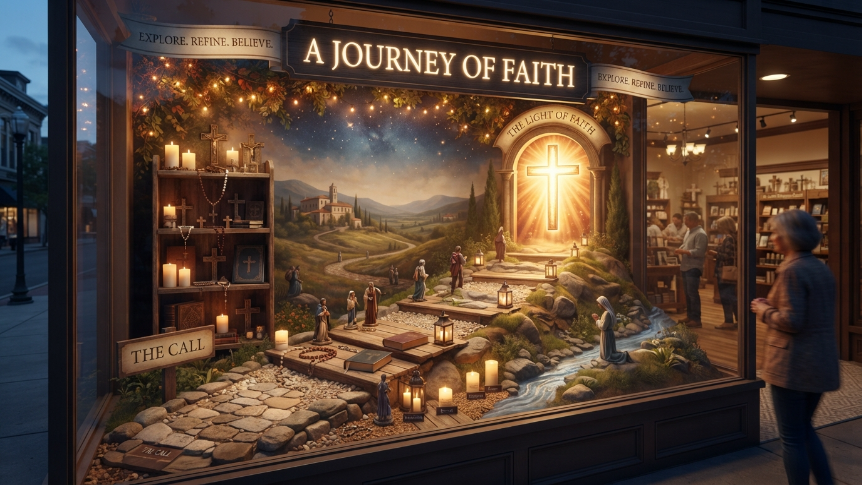
The most effective window displays tell a story. A clear theme gives context to your products and invites customers into a narrative that resonates emotionally and spiritually. For religious retailers, thematic storytelling is not merely a merchandising technique—it is an opportunity to honor the sacred narratives that give meaning to the products themselves.
Creating Thematic Displays for Religious Products
Grouping items by theme creates a visually cohesive and meaningful presentation. Retailers can organize displays based on saints, religious events, or spiritual themes:
Saint Collections: Arrange items dedicated to particular saints together—St. Michael, St. Francis, St. Therese, or other beloved figures. This allows customers to find devotional items for their patron saints quickly and creates a visually unified presentation.
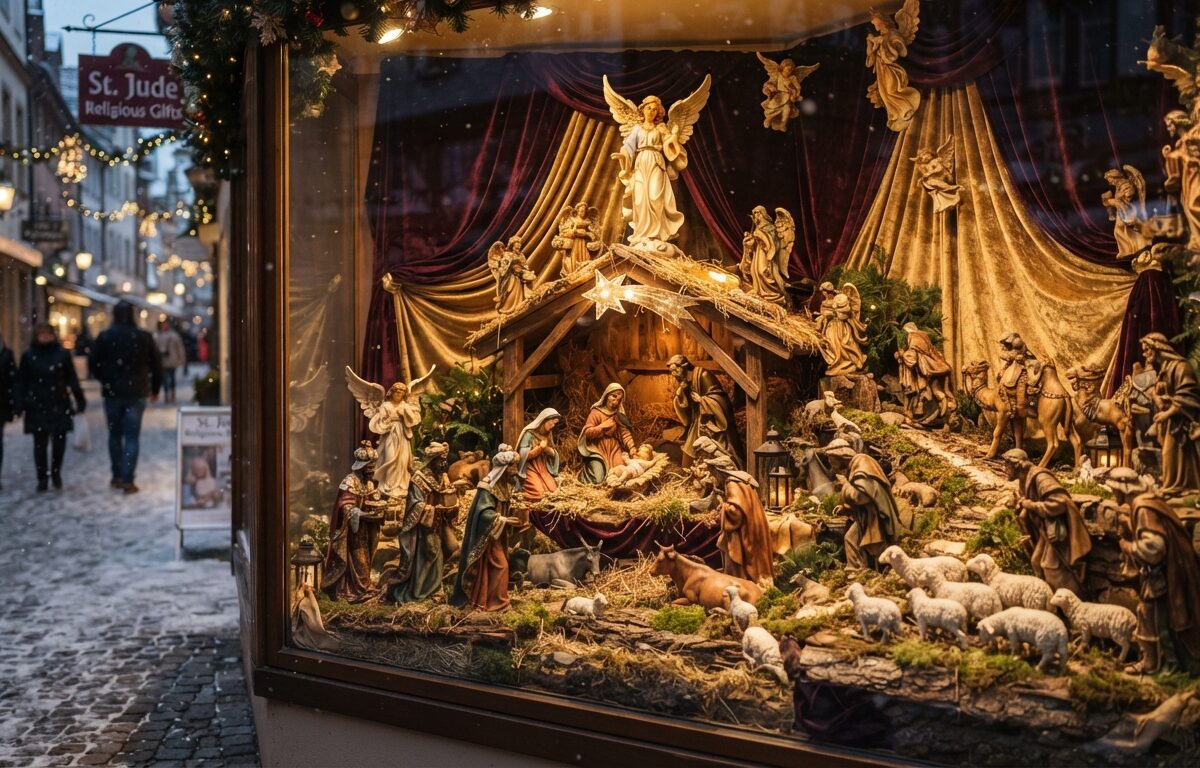
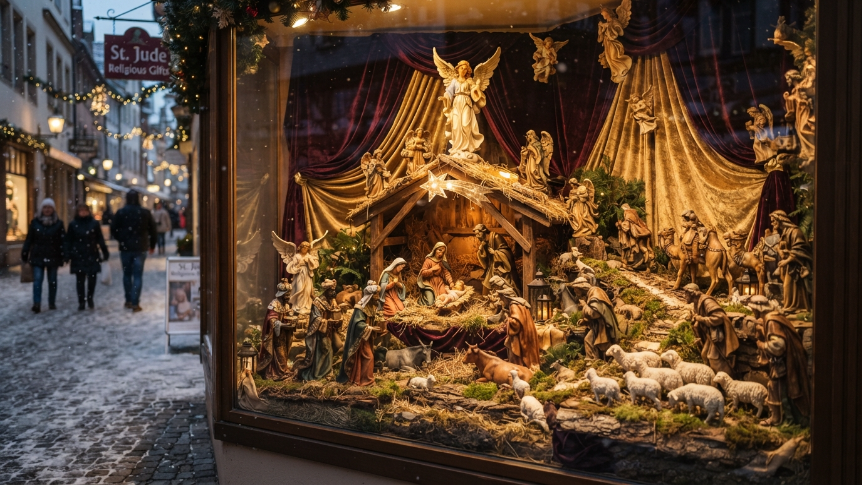
Liturgical Seasons: Display nativity scenes for Christmas, Resurrection items for Easter, and Marian statues for May devotion. Aligning your window with the liturgical calendar demonstrates attunement to the spiritual rhythms of your customers’ lives.
Angelic and Marian Themes: Set up areas dedicated to angel items and the Blessed Virgin Mary. These themes appeal broadly across denominations and create serene, uplifting visual compositions.
Faith and Inspiration: Tie together scripture-based gifts, inspirational wall art, and figurines to create a serene, uplifting display. Use consistent color palettes and textures in your themes to create a visually harmonious story.
Scripture-Based Storytelling
A well-arranged display can tell a compelling story. Create scenes from scripture—the Nativity, the Last Supper, or the Passion of Christ. Positioning products in a narrative format allows customers to engage emotionally and spiritually, making them more likely to purchase.
For example, a Christmas window might tell the story of the Nativity through a progression: angel figurines and stars at the top, shepherds and animals in the middle, and the Holy Family at the focal point. This narrative structure guides the eye through the display while telling a familiar and beloved story.
Seasonal and Occasion-Based Themes
Customers seek religious items for specific events like Christmas, Easter, and First Communions. Highlighting seasonal items with signage and dedicated display sections ensures customers find the right pieces for their celebrations. The average turnaround time for a store window is 4-8 weeks, which helps create regular newness for your customer.
Cultural Sensitivity in Thematic Displays
When designing thematic displays for religious products across different traditions, cultural sensitivity is paramount. Always research before using any symbols or designs. Stick to well-known geometric patterns or calligraphy that truly represent the culture, rather than just picking what looks good. Avoid using religious or cultural elements purely as a marketing gimmick. Be genuine with your approach.
Tip 2: Master the Principles of Visual Arrangement
Visual merchandising is the strategic placement, presentation, and design of products to maximize visual appeal, spark customer engagement, and drive sales. Great retail design starts with understanding the mind of the shopper. The way products are presented can significantly influence buying decisions.
Sarah Manning, a Visual Merchandising Lecturer and Specialist with over 25 years of experience working for luxury brands including Harrods, Selfridges, and Harvey Nichols, emphasizes four fundamental principles: Symmetrical, Asymmetrical, Repetition, and Alternation.
The Pyramid Principle
Building out your window or shop display in a pyramid shape, with the midpoint at the eyeline level, is a failsafe way to arrange your products. When a display is arranged symmetrically, it allows customers to take in the contents quickly and easily.
Symmetrical Presentation: A pyramid creates a mirror image and balance on either side. The top of the pyramid should be positioned at the eyeline level of your customer. Organize the base with 3-5 items, maintaining a symmetrical layout for stability and visual harmony.
Asymmetrical Presentation: A half pyramid graduating either toward the left or right. When using asymmetry within a window, ensure the graduation takes your customer’s eye toward the store entrance.
Repetition and Alternation
Repetition: Use odd numbers, with groups of three being most popular, creating a central focal point. Repeat consistent patterns throughout the display.
Alternation: An alternating pattern assists customers’ eyes in flowing through the composition with ease.
Practical Application for Religious Stores
For a religious product window, the pyramid principle might translate as:
Base (3-5 items): Larger items like statues, crucifixes, or decorative urns
Middle: Medium-sized items like framed art, candle holders, or prayer books
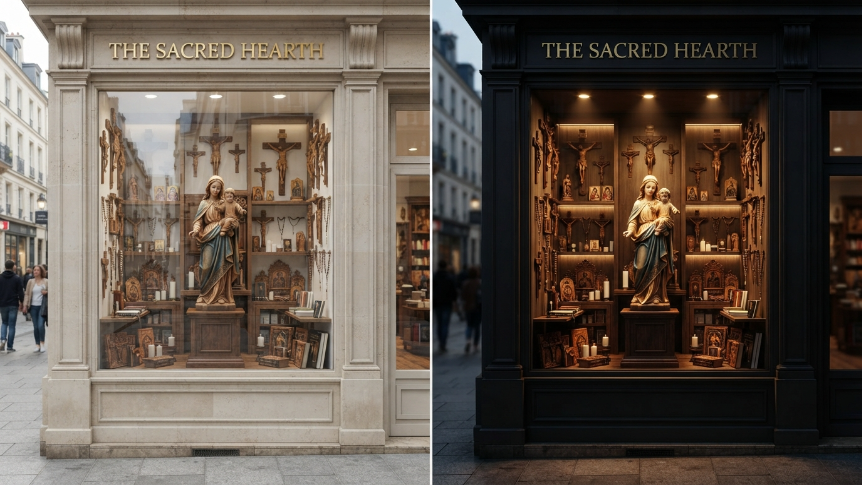
Apex: A single focal piece—perhaps a particularly beautiful Madonna statue, an intricately carved cross, or a stunning piece of religious art
This structure creates visual stability and guides the eye naturally through the display.
Using Varying Heights and Levels
Creating depth and visual interest is crucial for an eye-catching display. Use shelves, risers, or pedestals to elevate certain items, making them stand out. Bigger items can be placed at the back, with smaller ones in the foreground, leading the eye naturally through the display.
Tip 3: Apply Color Psychology with Cultural and Liturgical Awareness
Color is one of the most powerful tools in retail—setting the tone, evoking emotion, and directing shopper focus within seconds. Color theory provides a framework for creating visually appealing displays, cohesive brand experiences, and environments that evoke specific emotions and behaviors in customers. For religious retailers, color carries additional layers of meaning rooted in tradition, liturgy, and cultural symbolism.
The Fundamentals of Color Harmony
Color harmony enhances the visual appeal of displays, creating a pleasing and balanced arrangement that appeals to shoppers. Harmony involves combining two or three colors from the same range or with soft contrast; the base is always harmonious. Contrast creates a dynamic feeling by putting opposite colors against each other.
Color blocking—using colors that work together to make a visual statement—can elevate displays significantly. Your choice of colors should be contrasting or complementary, positioned across from each other on the color wheel.
Liturgical Colors: A Deeper Palette
For Christian religious stores, liturgical colors offer a ready-made palette rich with meaning:
Color
Liturgical Meaning
Visual Merchandising Application
Purple/Violet
Penitence, preparation, royalty
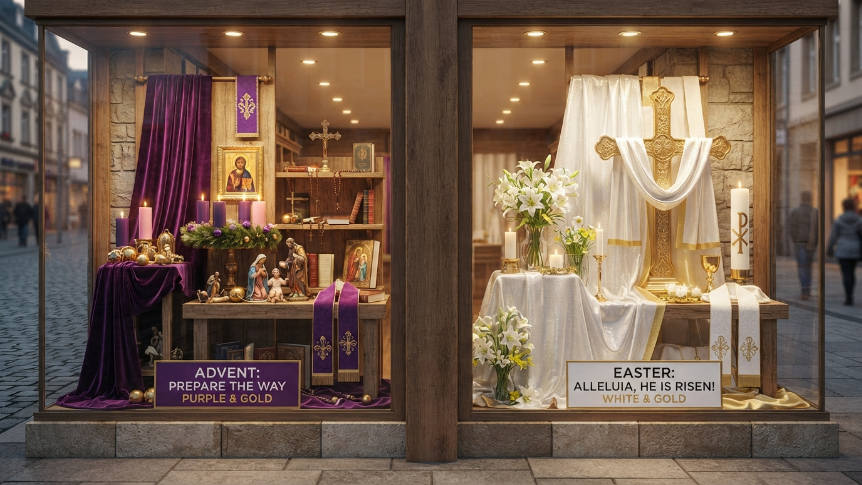
Advent and Lenten displays; creates a sense of solemnity and anticipation
White/Gold
Joy, purity, celebration
Easter, Christmas, and feast day displays; communicates radiance and glory
Green
Growth, hope, ordinary time
Year-round displays; creates a sense of peace and natural beauty
Red
Martyrdom, Holy Spirit, passion
Pentecost, martyr feast days; creates energy and draws attention
Purple and rose appear during Advent, shifting to white and gold for Christmas, mirroring the Church’s calendar. Aligning your window’s color palette with the liturgical season demonstrates sophistication and spiritual attunement.
Color Psychology in Different Religious Traditions
Colors work fast—our brains process them in less than a second. Psychology explains part of it: red grabs our attention, blue makes us feel calm, green signals growth. But culture adds another layer. What soothes one group may unsettle another.
For religious stores serving diverse traditions, understanding cultural color associations is essential:
Islamic tradition: Green holds special significance; geometric patterns and calligraphy in gold and blue are culturally appropriate
Hindu tradition: Saffron, red, and gold carry deep spiritual meaning
Jewish tradition: Blue and white are associated with prayer and divine presence; gold adds a sense of holiness
Buddhist tradition: Gold, saffron, and deep reds evoke monastic traditions and spiritual richness
Practical Color Strategies for Religious Displays
Tonal Cohesion: Tonal cohesion drives the mood home. Try energetic reds for a limited-time feast day display or calming neutrals for everyday devotional items. Consistent palette choices make the storefront design recognizable from a distance.
Monochromatic Schemes: If you have a window of all one color, you can use both light and dark variations within the same range of hues. For example, an all-blue display might feature navy, royal, and sky blue items together.
Rainbow Gradients: Using the rainbow spectrum (ROYGBIV) creates a high-energy display that is pleasing to the eye. When featuring spectrum order, ensure the degree of saturation is consistent—a bright red rather than pink to set off true blue, green, and yellow.
Seasonal Color Shifts: For Christian stores, shift from purple to white and gold for Christmas, from purple to red for Pentecost, and use green for ordinary time.
Tip 4: Illuminate with Purpose and Reverence
Proper lighting enhances the beauty of religious items and highlights their craftsmanship. Soft, warm lighting creates a reverent atmosphere, while spotlights can be used to accentuate intricate details. For religious product windows, lighting serves both practical and spiritual purposes.
Layered Lighting for Sacred Spaces
Ambient Lighting: Establishes the overall mood and warmth of the display. For religious items, ambient lighting should be soft and warm, creating a sense of peace and reverence. Avoid harsh, cold lighting that can make sacred objects feel clinical or impersonal.
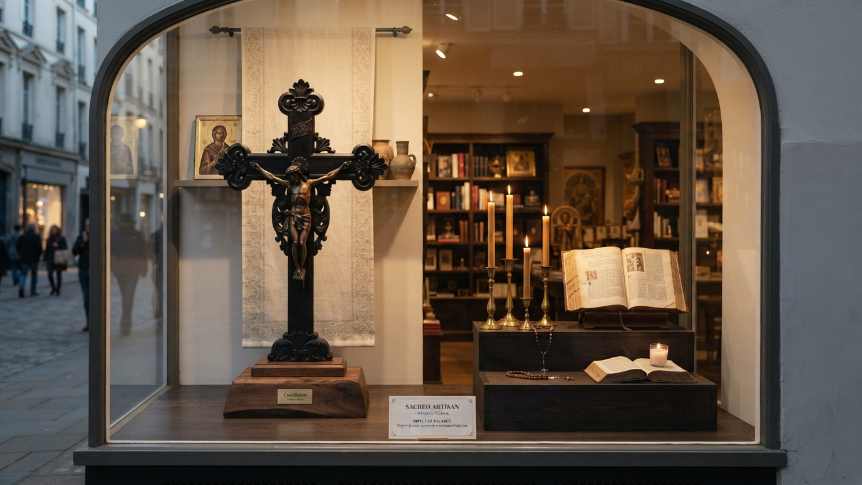
Accent Lighting: Directional accent lights highlight specific pieces and create spiritual focal points. Use spotlights to draw attention to particularly beautiful or significant items—a stunning crucifix, an intricately carved statue, or a radiant Madonna.
LED Backlighting: Can enhance texture and create an immersive brand moment. Backlighting works beautifully for items with translucent or carved elements, such as alabaster statues, crystal rosaries, or intricately cut metalwork.
Hidden Lighting: One or more hidden light sources can accentuate the appearance of suspension and create a floating, ethereal effect. This technique works particularly well for displaying icons, crosses, or angel figurines.
Lighting for Different Product Types
Statues and Figurines: Use directional spotlights from a 45-degree angle to reveal facial features and three-dimensional form. Avoid flat, front-only lighting that diminishes depth.
Framed Art and Icons: Controlling glare is essential for framed or glass-covered pieces. Angle lights to avoid reflections while illuminating the artwork itself.
Jewelry and Small Devotional Items: LED accent lighting and gentle ambient light produce the most balanced spiritual display. Small spotlights or track lighting can make tiny details sparkle.
Textiles and Vestments: Soft light that reveals textures and shimmering metallic threads. Avoid harsh light that can wash out rich colors.
Practical Lighting Tips
Ensure the display is visible from different viewpoints—the pavement outside the shop, the opposite pavement, and the street
When viewed at night, lighted presentations give a floating-in-air look to icons and create attractive, inspiring displays
Combine LED accent lighting with gentle ambient light for the most balanced spiritual display
Layer your lighting—ambient for mood, accent for focus, and task lighting for visibility
Tip 5: Create a Clear Focal Point
One hero piece—often a bestseller or bold new arrival—anchors the display and directs the eye. Supporting items, props, and signage should frame, but not compete with, the focal product to reinforce its must-have status.
Selecting the Focal Piece
For religious product windows, the focal point might be:
A particularly beautiful statue or figurine
An intricately crafted crucifix or cross
A stunning piece of religious art
A new arrival from a respected artisan
A seasonal centerpiece (nativity scene, Easter lily arrangement, etc.)
Framing the Focal Point
Once you’ve selected your focal piece, everything else in the display should support and frame it:
Height: The focal piece should be at or slightly above eye level.
Position: Place the focal point slightly off-center for asymmetrical displays or dead-center for symmetrical arrangements.
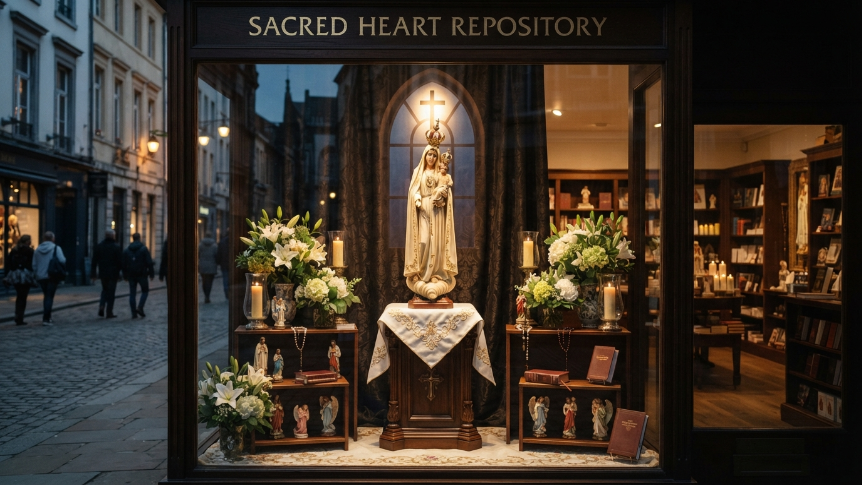
Supporting Items: Surround the focal piece with complementary items that enhance rather than compete. For example, if a Madonna statue is the focal point, frame it with candles, flowers, and smaller devotional items.
Props: Use props—fabric, risers, pedestals, or thematic elements—to create a “stage” for the focal piece without distracting from it.
Examples of Focal Points in Religious Displays
Catholic Store Example: A hand-painted porcelain Madonna statue as the focal point, elevated on a velvet-draped pedestal, surrounded by candles and framed by soft lighting. Smaller angel figurines and prayer cards arranged at the base.
Islamic Store Example: A stunning piece of calligraphic art as the focal point, framed by geometric patterns, with smaller items arranged symmetrically below.
Mandir Shop Example: A beautifully carved deity statue as the focal point, elevated on a raised platform, with offerings, incense, and smaller decorative items arranged around it.
Tip 6: Use Props and Backgrounds to Enhance Sacred Aesthetics
Background elements, such as velvet cloths or religious-themed backdrops, enhance the display’s sacred appeal. Props create depth and dimension within the window space. For religious retailers, the choice of props and backgrounds carries particular significance.
Choosing Appropriate Backgrounds
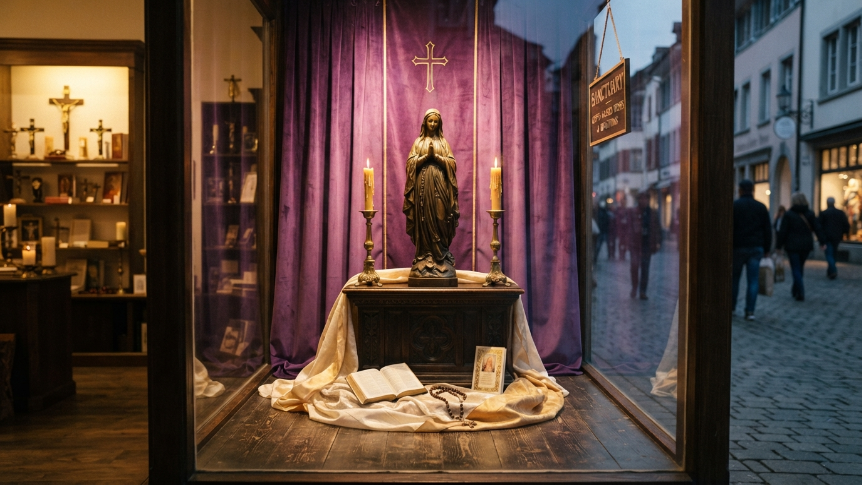
Velvet and Rich Fabrics: Velvet cloths in deep colors—purple, burgundy, gold, navy—create a sense of luxury and reverence. The soft texture complements the tactile quality of many religious items.
Religious-Themed Backdrops: Stained glass patterns, sacred geometry, or subtle religious symbols can serve as beautiful backdrops. For example, a backdrop featuring Metatron’s Cube or the Flower of Life can create a sacred atmosphere.
Natural Materials: Using clean, natural materials like wood creates a welcoming environment. Wood-finish surfaces introduce familiarity and warmth, balancing the reflective nature of displayed artifacts without competing with them.
Minimalist Design: Clean lines and subtle geometric patterns. A masterfully crafted wooden display within a warmly lit niche can hold sacred texts with reverent elegance.
Prop Selection for Religious Displays
Props should enhance, not distract from, the products:
Pedestals and Risers: Create height variation and elevate important pieces.
Candles: Add warmth, light, and a sense of prayerfulness. Battery-operated candles offer safety without sacrificing ambiance.
Fabric Draping: Soft fabric draped behind or beneath items adds texture and creates a sense of luxury. Colors should complement the liturgical or seasonal palette.
Natural Elements: Flowers, branches, or dried arrangements can add organic beauty and seasonal relevance.
Geometric Elements: Sacred geometry patterns, golden ratio spirals, and Fibonacci sequences can guide the arrangement of merchandise.
Avoiding Clutter
Visual complexity without clutter is the goal. The general rule is to keep merchandise and props tightly grouped. Every element should serve a purpose—either highlighting a product or creating an atmosphere.
Tip 7: Balance Sacredness with Commercial Appeal
One of the greatest challenges for religious retailers is balancing the sacred nature of their products with the commercial necessity of attracting customers and driving sales. This balance requires thoughtful consideration of every element in the window display.
The Challenge of Sacred Retail
Designing a religious store requires a thoughtful approach that respects both the sacredness of the space and the practicalities of retail. The goal is to create an environment where religious artifacts are experienced “as extensions of memory and ritual rather than isolated retail objects”.
Strategies for Balancing Sacred and Commercial
Quality Over Quantity: Display fewer items with greater impact. A store that displays just 15 pieces at any one time can highlight exceptional details and create a sense of curation. This approach works particularly well for high-end religious items.
Museum-Quality Presentation: Present sacred objects, devotional gifts, and historical editions “with the care of museum artifacts”. This elevates the perception of quality and communicates reverence.
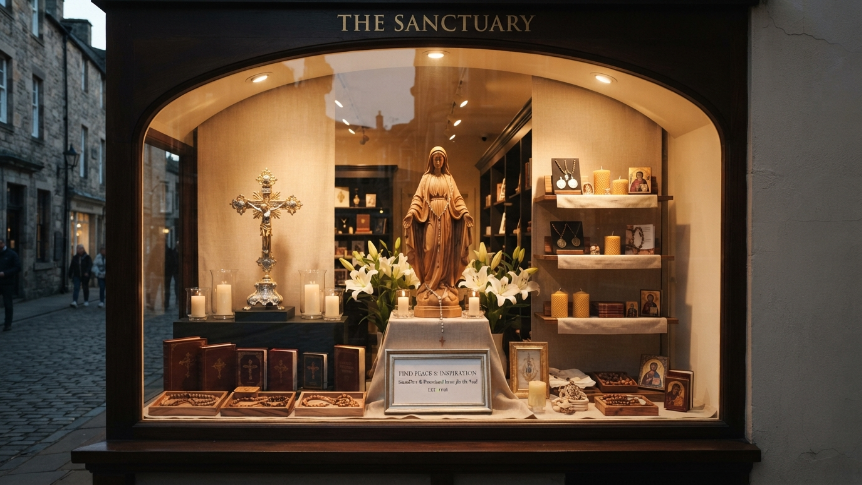
Subtle Signage: Instead of aggressive sales messaging, use signage that speaks to the heart. Rather than “New Arrivals,” try “Gifts to Treasure for Life’s Most Precious Moments”. For faith-based collections, use uplifting messages that inspire hope and comfort.
Storytelling Over Selling: Retail storytelling means helping customers understand not just what a product is, but why it matters. Include a short backstory on how the piece connects to timeless beliefs and values. Add small product tags or tabletop frames with a one-sentence “story snippet” for each featured product.
Themed Arrangements: Group items by devotion—such as a Marian corner or saint-specific section—to guide customers intuitively. This creates a sense of discovery rather than a hard sell.
The Dangers of Over-Commercialization
Avoid using religious or cultural elements purely as a marketing gimmick. Customers who seek religious items are often spiritually motivated; inauthentic or overly commercial presentations can alienate them. Be genuine with your approach.
Tip 8: Incorporate Complementary Products for Complete Devotional Sets
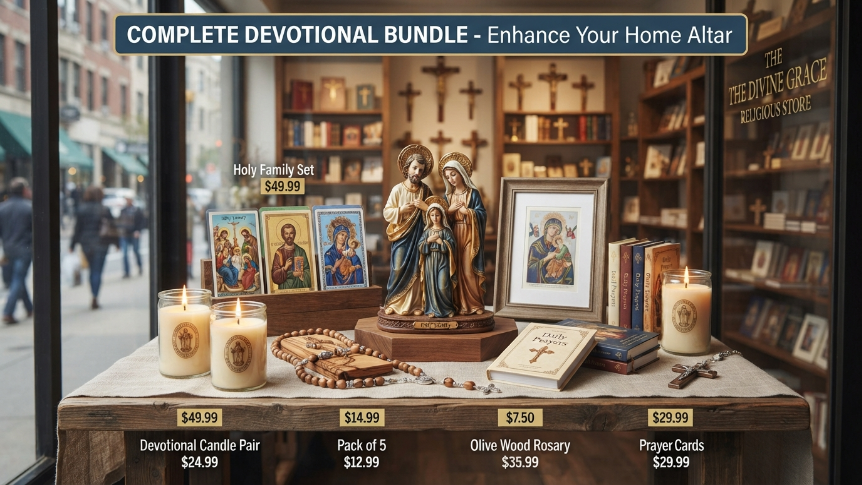
Enhance individual product displays by pairing them with complementary items. Placing spiritual jewelry, prayer cards, rosaries, or candles alongside items creates a complete devotional setup and encourages multi-item purchases.
The Power of Product Bundling
Bundling items together can increase sales significantly. Consider:
A Holy Family set including Mary, Joseph, and Baby Jesus items
A saint devotion package featuring a figurine, a prayer card, and a matching medal or spiritual jewelry
A sacramental gift set with a figurine, a rosary, and a candle for First Communion or Confirmation gifts
Creating Complete Devotional Experiences
When designing your window display, think in terms of complete devotional experiences rather than individual products:
For a Prayer Corner: Combine a statue or crucifix with prayer candles, a prayer book or card, and perhaps a rosary or set of beads.
For a Gift-Giving Display: Pair a figurine with a gift box, a card, and a small devotional booklet.
For Seasonal Celebrations: Bundle items related to specific feasts or seasons—Advent wreaths with candles, Easter items with resurrection-themed art, Christmas items with nativity figures.
Visual Cohesion in Complementary Displays
When displaying complementary products:
Use consistent color palettes and textures to create visual harmony
Arrange items to suggest their relationship—a larger item with smaller companion pieces clustered around it
Use signage to explain the connections between items
Create visual “stories” that show how products work together
Tip 9: Adapt Displays to Your Specific Market and Tradition
Window displays should adapt to their location. Commercial markets and more fashion-forward markets appreciate newness and emotional dressing. Displays must hit the right notes geographically for the area’s specific consumer base.
Understanding Your Customer Profile
When creating your shop window display, consider your customer profile and brand style to create a strong, consistent message. Questions to consider:
What religious tradition does your store serve?
What is the demographic profile of your typical customer?
What is the socioeconomic context of your location?
What are the seasonal and liturgical rhythms of your community?
What are the local cultural expectations around religious expression?
Tradition-Specific Display Considerations
Catholic/Christian Stores: Focus on liturgical seasons, saint devotion, and sacramental themes. Use liturgical colors and traditional iconography.
Islamic Stores: Emphasize geometric patterns and calligraphy that truly represent the culture. Avoid using religious elements as mere decoration.
Hindu/Mandir Stores: Create displays that respect the sacredness of the space while addressing retail practicalities. Floating cabinets can provide modern, clean display areas for religious artifacts.
Jewish Stores: Incorporate symbols of Jewish faith and tradition with appropriate reverence. Lighting can create floating, inspiring displays of sacred items.
Afro-Religious Stores: Present items in ways that honor their ritual significance while making them accessible to customers.
Seasonal and Cultural Adaptation
Align with major religious holidays and seasons
Consider local cultural events and celebrations
Respond to community needs and interests
Refresh displays regularly to maintain interest
Tip 10: Refresh, Measure, and Refine
A window display is not a one-time effort but an ongoing process of creation, measurement, and refinement.
The Refresh Cycle
The average turnaround time scale of a store window is 4-8 weeks. This helps create regular newness for your customer. Refresh your window display to keep pace with new shipments, seasonal moods, and monthly merchandise flows.
Weekly Tasks: Check lighting, clean glass, adjust items that have shifted, replace damaged or faded elements.
Monthly Tasks: Assess whether the display is still working, make small adjustments to improve composition, update signage if needed.
Seasonal Tasks: Completely redesign the display to align with liturgical seasons, major holidays, and new merchandise arrivals.
Measuring Success
How do you know if your window display is working?
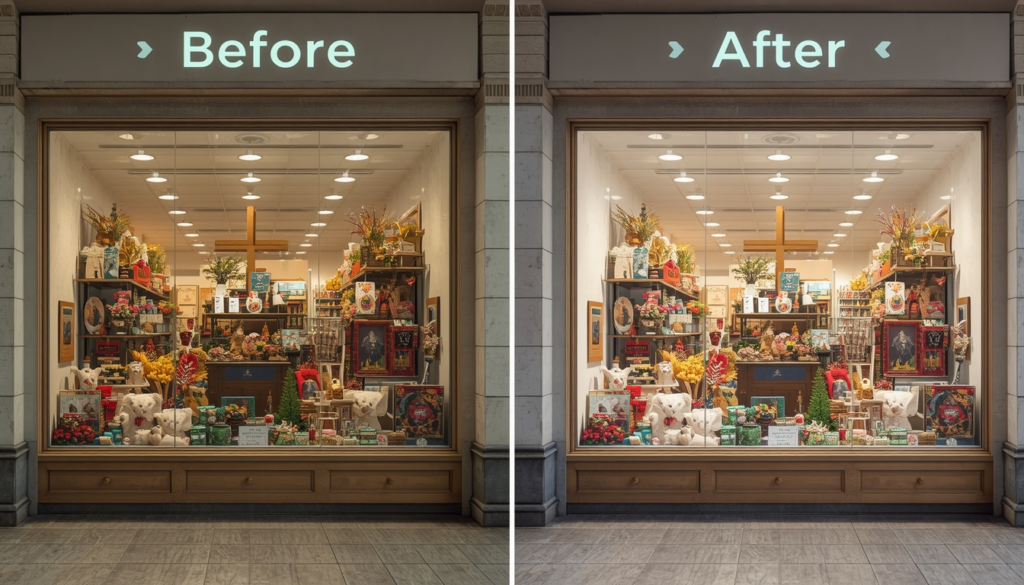
Foot Traffic: A well-designed storefront or striking window display can increase foot traffic by up to 25 percent. Track the number of people who enter your store before and after display changes.
Dwell Time: Do people stop and look? Do they linger? Observe pedestrian behavior near your window.
Sales Impact: Track sales of featured items before, during, and after they appear in the window.
Customer Feedback: Ask customers what attracted them to your store. What did they notice in the window?
Social Media Engagement: If you photograph your displays and share them online, track engagement metrics.
Learning and Refining
Great products deserve a great presentation. In-store success doesn’t happen by chance—it’s the result of intentional design, strategic placement, and a deep understanding of how shoppers browse, engage, and buy.
Keep a record of what works and what doesn’t. Take photos of each display. Note which displays generated the most foot traffic and sales. Use this information to refine your approach over time.
.
Conclusion: The Art of Sacred Display
Creating delightful window displays for religious product stores is both a science and an art—a discipline that draws on the principles of visual merchandising, color theory, retail psychology, and sacred aesthetics. The ten tips presented in this guide provide a comprehensive framework for designing displays that honor the sacred nature of religious products while effectively attracting customers and driving sales.
Remember that religious items are more than merchandise; they are powerful symbols of faith, devotion, and tradition. Every display you create is an opportunity to honor that significance, to inspire passersby, and to invite customers into a deeper engagement with their faith.
In the end, the most successful religious store window displays are those that achieve a delicate balance: commercial enough to attract customers, sacred enough to inspire devotion, beautiful enough to be photographed, and authentic enough to build lasting trust.
As you implement these strategies, remember that your window display is not just a retail tool—it is a ministry of beauty in the midst of the everyday. Make it worthy of the sacred objects it presents.
Bibliographic References
Archway. (2025). Top 5 Visual Merchandising Techniques: Creating Compelling Product Displays That Drive Sales. Archway Blog.
DEMDACO Retailers. (2025). How to Build Emotional Connections in Your Store Through Signage, Themes & Storytelling. DEMDACO Retailers Blog.
DG Display Showcase. (2025). How to Highlight Islamic Cultural Elements Through Jewelry Store Design? Degree Furniture.
Dillon, M. (2025). Color Psychology in Retail. Cited in Schroeder, C., Consider Color Blocking Basics to Elevate Your Displays. Gifts & Decorative Accessories.
McVan Inc. (2025). Display and Sales Strategies for Catholic Items. McVan Inc Blog.
Manning, S. (2025). 10 Key Principles of Visual Merchandising for Retailers. Springfair.com.
Morgan, T. (n.d.). Visual Merchandising: Window and In-Store Displays for Retail. Smithsonian Institution.
Schroeder, C. (2026). Consider Color Blocking Basics to Elevate Your Displays. Gifts & Decorative Accessories.
Shopify Australia. (2025). Window Displays: A Guide to Designing and Measuring Success. Shopify Blog.
Coohom. (2026). Creating a Serene Mandir Shop Design. Coohom Blog.
Coohom. (2026). How Lighting Enhances Virgin Mary Wall Art Displays. Coohom Blog.
Lightspeed. (2026). Retail Summer Window Display Ideas to Keep Shoppers Coming In. Lightspeed HQ.
Faire. (2025). The Retail Color Story: Crafting Spaces That Connect and Convert. Faire Blog.